Tuesday, 30 March 2010

fact and fiction bleed together


"The American mirror, said the voice, the sad American mirror of wealth and poverty and constant useless metamorphosis, the mirror that sails and whose sails are pain."

— Roberto Bolaño

2666


In Roberto Bolaño's 2666 the authors research is clearly seen in his practice as the chapter entitled 'The Part About The Crimes' documents a series of femicides that occurred in Ciudad Juarez with a journalistic detachment that makes the reading of the chapter more unsettling. In the novel, the crimes are set in the fictional town of Santa Teresa. The author gives a context to each of the murders to humanize the victims and explore the ongoing corruption that allows the murder of women to continue without being cluttered by the media's focus on Ciudad Juarez as a battleground in Mexico's drug war. These are human casualties.

Friday, 26 March 2010

comic book horror noir


Jacques Tardi

comic book noir


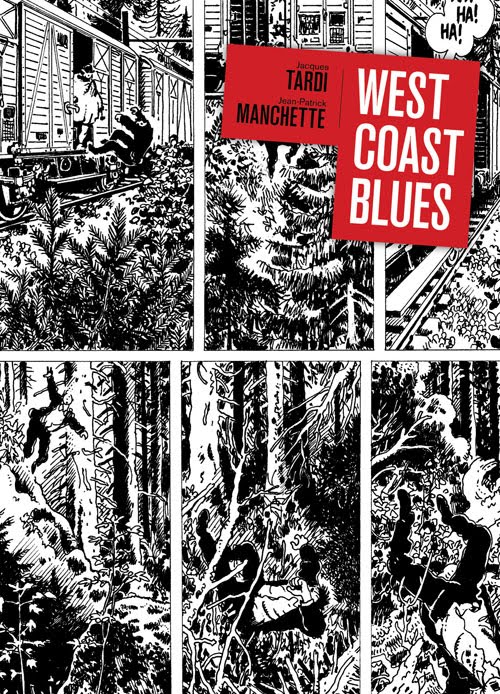
Jacques Tardi allows dreams and reality to fragment and synthesize in his work, to highlight the mental and physical trauma that is produced by acts of violence. His protagonists have difficulty in separating fact from fiction and the reader cannot anticipate the outcome as the fragmented narrative unfolds, becoming more involved with the work.

strewn newspapers

newspapers, reflections and locked doors...


Francis Bacon, Study of George Dyer, 1969 (oil on canvas)


--------------------------------------------------------------------


Francis Bacon, In Memory of George Dyer, 1971 (oil on canvas)

---------------------------------------------------------------


Francis Bacon, A Piece of Wasteland, 1982 (oil on canvas)


----------------------------------------------------------------------


visual references...


film language transferred to an alternative medium...


Still from Sergei Eisenstein's Battleship Poemkin, 1925

Bacon frequently referenced images from film and photography to construct narratives...


-------------------------------------------------------------------------

"I had a furious row with a studio executive once: he said, "They won't get it, Nic" and I said, "No, they'll get it; it's you who's not getting it, because you're trying to force something that's different into being the same". People usually arrive to see something with an open mind. I want to make them feel something emotionally, but not by planning how to get them there. That would almost be like the communist days when newspapers told people what to think - when there was no competition with Pravda."

-Nicolas Roeg


http://www.guardian.co.uk/film/2005/jun/03/hayfilmfestival2005.hayfestival


-------------------------------------------------------------------------


cut-ups
...

fragments of information...

torn newspapers.... partial headlines...

interpretation...

perception...

Wednesday, 24 March 2010

Rius


---------------------------------------------------------------------------


"Rius's comics were not for escapist entertainment but were intended as cultural guerilla warfare, attempting to shame the middle-class Mexican into an awareness of his society and its glaring inequalities and hypocrises."
(Raat: 39)


Ed. Raat, W.D. and Beezley, W.H. (2007) Twentieth Century Mexico, USA: University of Nebraska Press


http://lambiek.net/artists/r/rius.htm

Aztec mythology and Mexican 'comics'


above: A page from the Codex Borgia showing Aztec gods of life and death - image taken from The skeleton at the feast: the Day of the Dead in Mexico (by Elizabeth Carmichael and Chloë Sayer) .


Picture manuscript...

Discovered c.1519 in Mexico


------------------------------------------------------------------

McCloud, S. (1993) Understanding Comics: The Invisisble Art, New York: Harper Collins

visual narrative

film > comic
storyboards > layout & pagination
screen > print > computer screen

interactive medium > active audience

-----------

mise en scene > mise en page


"Where the filmic image enters into a spatial relationship only with the off-screen space cut off by the frame, the bande dessinée image will always be perceived simultaneously with other images. Each panel is, then, surrounded by its perifield." (Peters 1991:15)

Miller, A. (2007) Reading Bande Dessinée: Critical Approaches to French Language Comic Strip, UK: Intellect Books